ENVIRONMENT LINEAGES
Chains in the built world
S1 · hand-drawn
→

S4 · generative

S3 · sculpt
→

S4 · generative

S3 · sculpt
→

S4 · generative

S4 · generative
→

S4 · generative

S4 · generative

S4 · generative

Hold the corridor's rivet-by-rivet density in mind. That is what the next stage feeds on — the structures below are the clean, editable geometry recovered from generative plates like these.
S4 · generative
→
S5 · 3D structure

S4 · generative
→
S5 · 3D structure
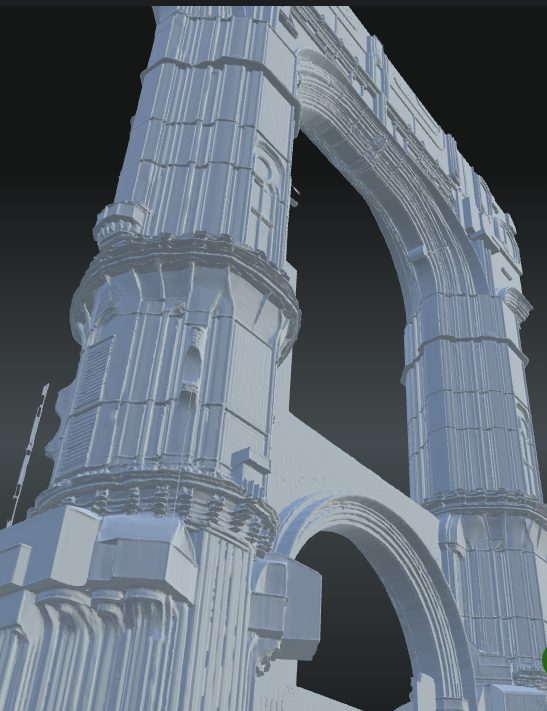
More environment chains — abyssal dunes, the processing nave, Camp Harmonia — will be filled here with verified end-to-end captures as the pipeline runs, including the missing S2 reference-photo rung. Click any image to open it full-resolution and cycle the chain.


