HOW THIS TIER WORKS
Five tools, one closed loop
REFERENCE → SCRIPT → SKILLS → USD → MODALITY
The AI · Agentic tier is not five disconnected products. It's
one continuous loop:
a reference image goes in, a staged scene comes out the other side,
the skills converge into one USD scene, and that scene branches three
ways — digital UE5, physical 3D print, or latent HDR backdrop. The
recorded plate drops back into the reference library. The path broadens
while the look refines.
▸ STEP 1 · DIRECT
Scene Composer
$49 · BETA.
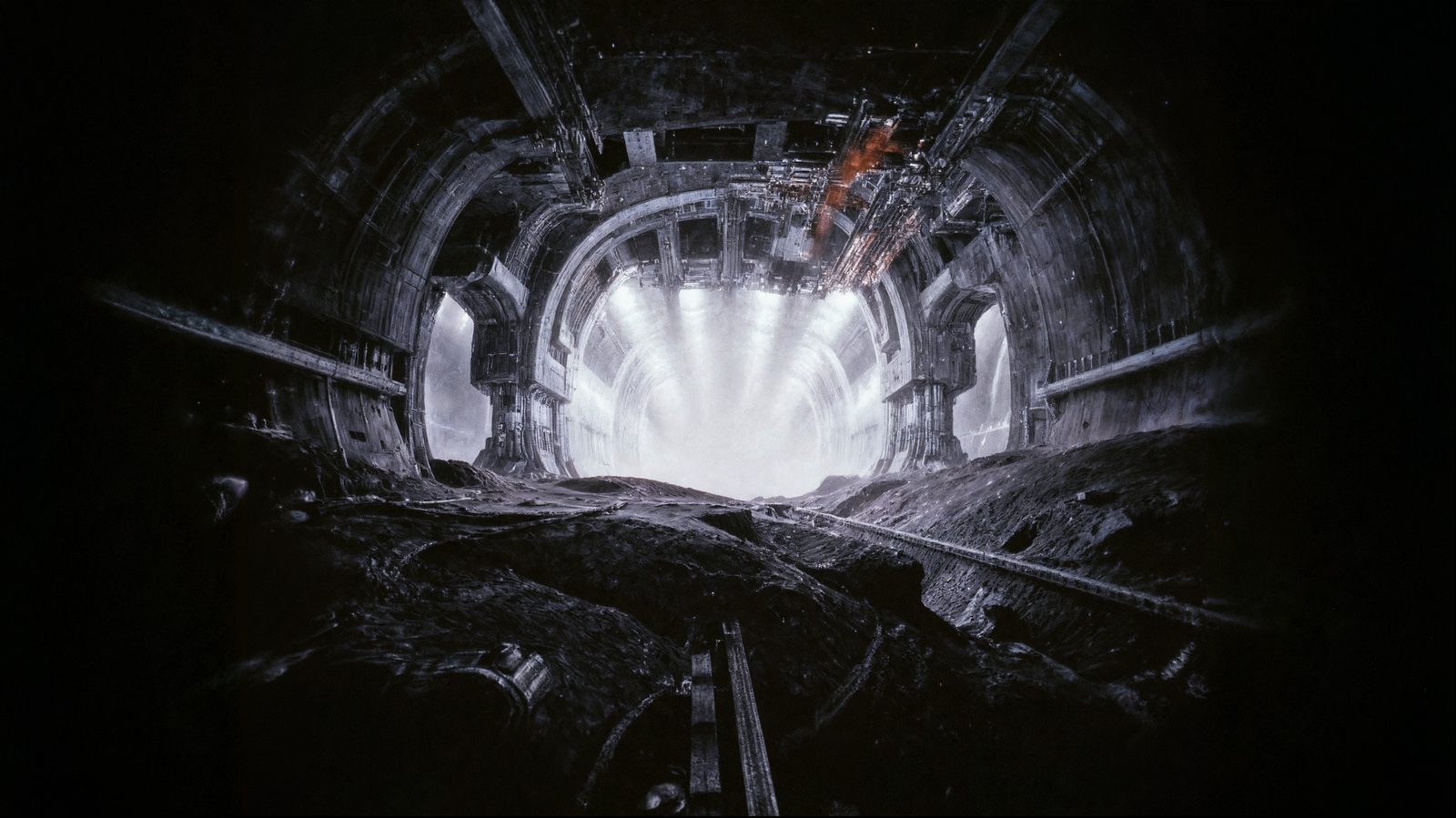
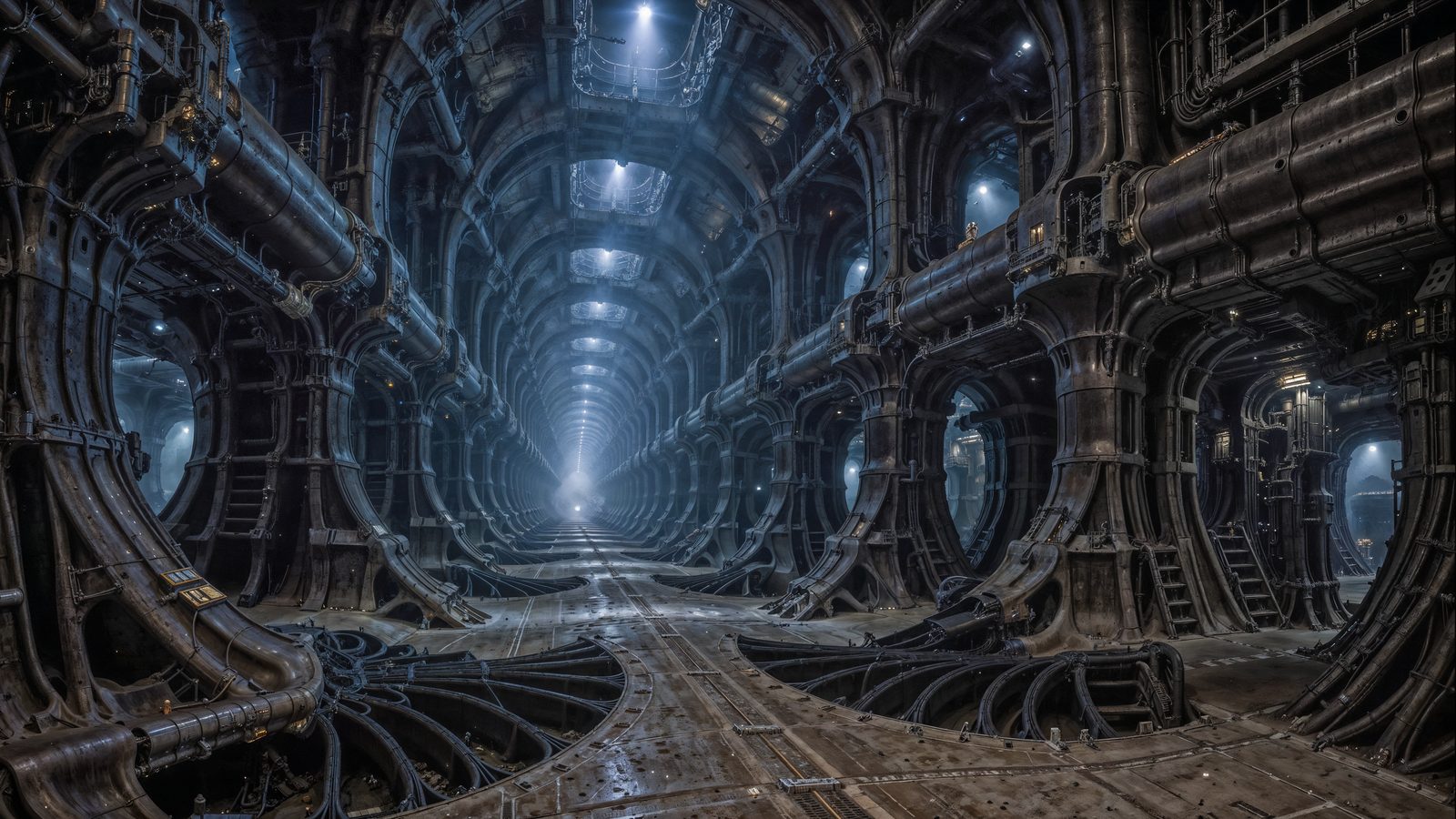
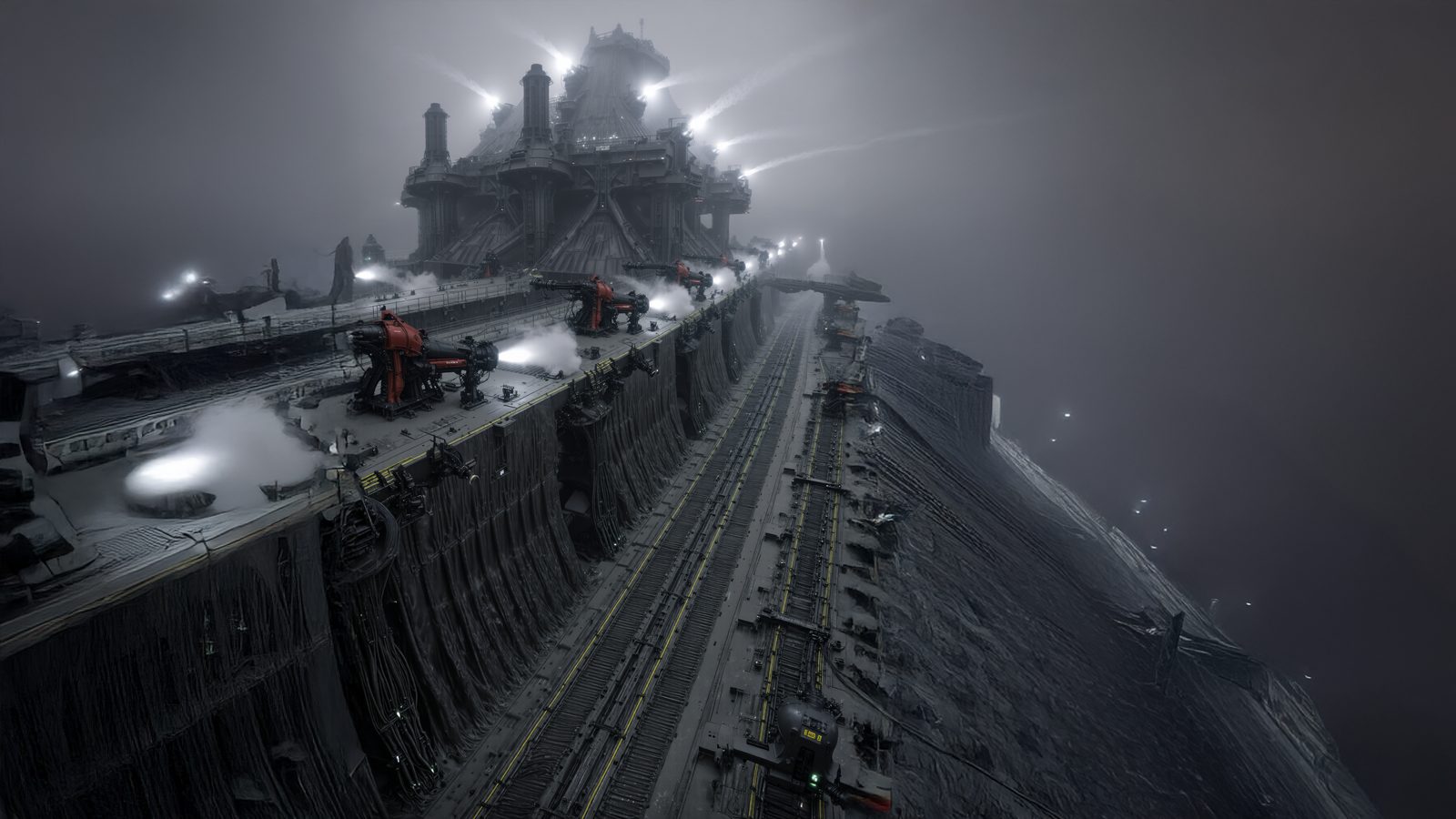
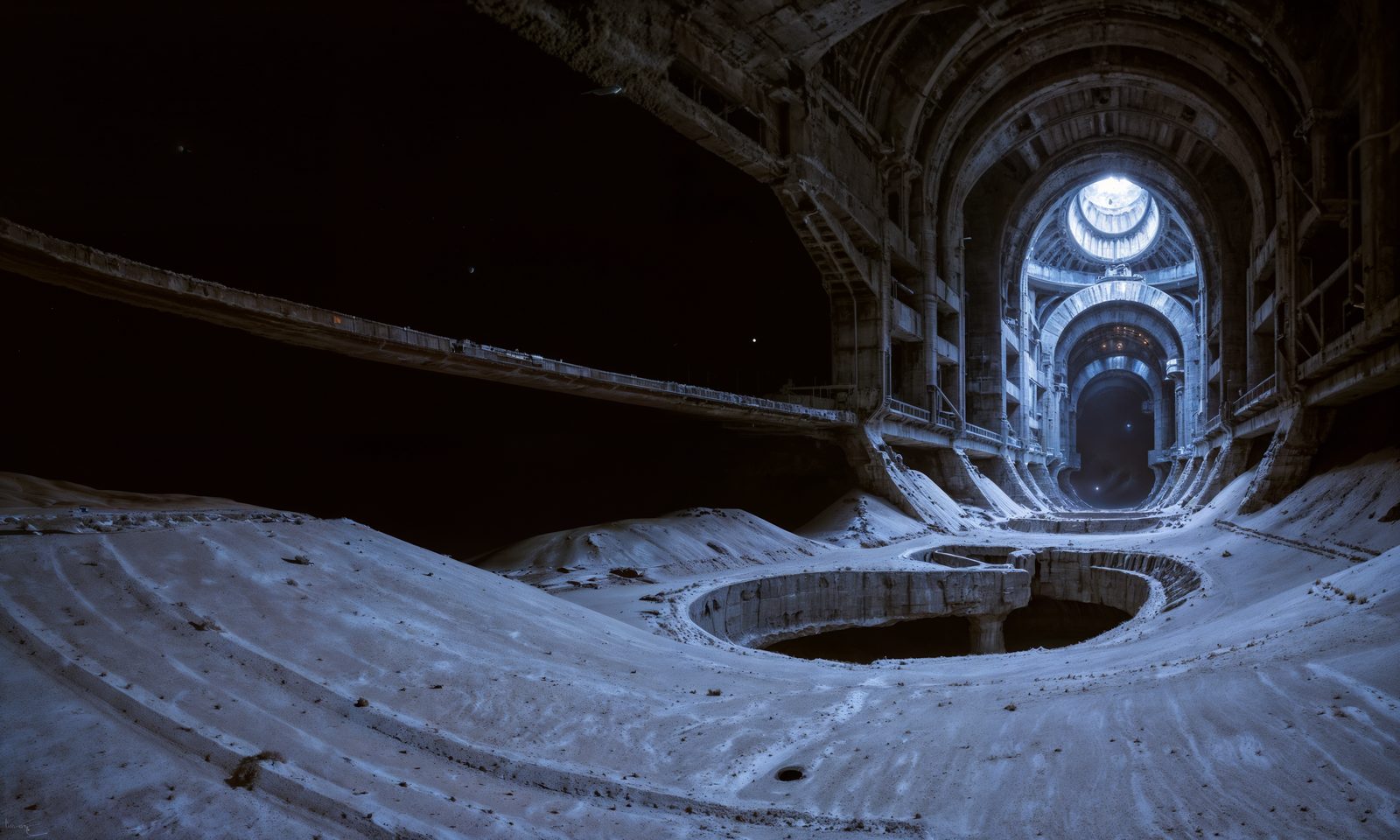
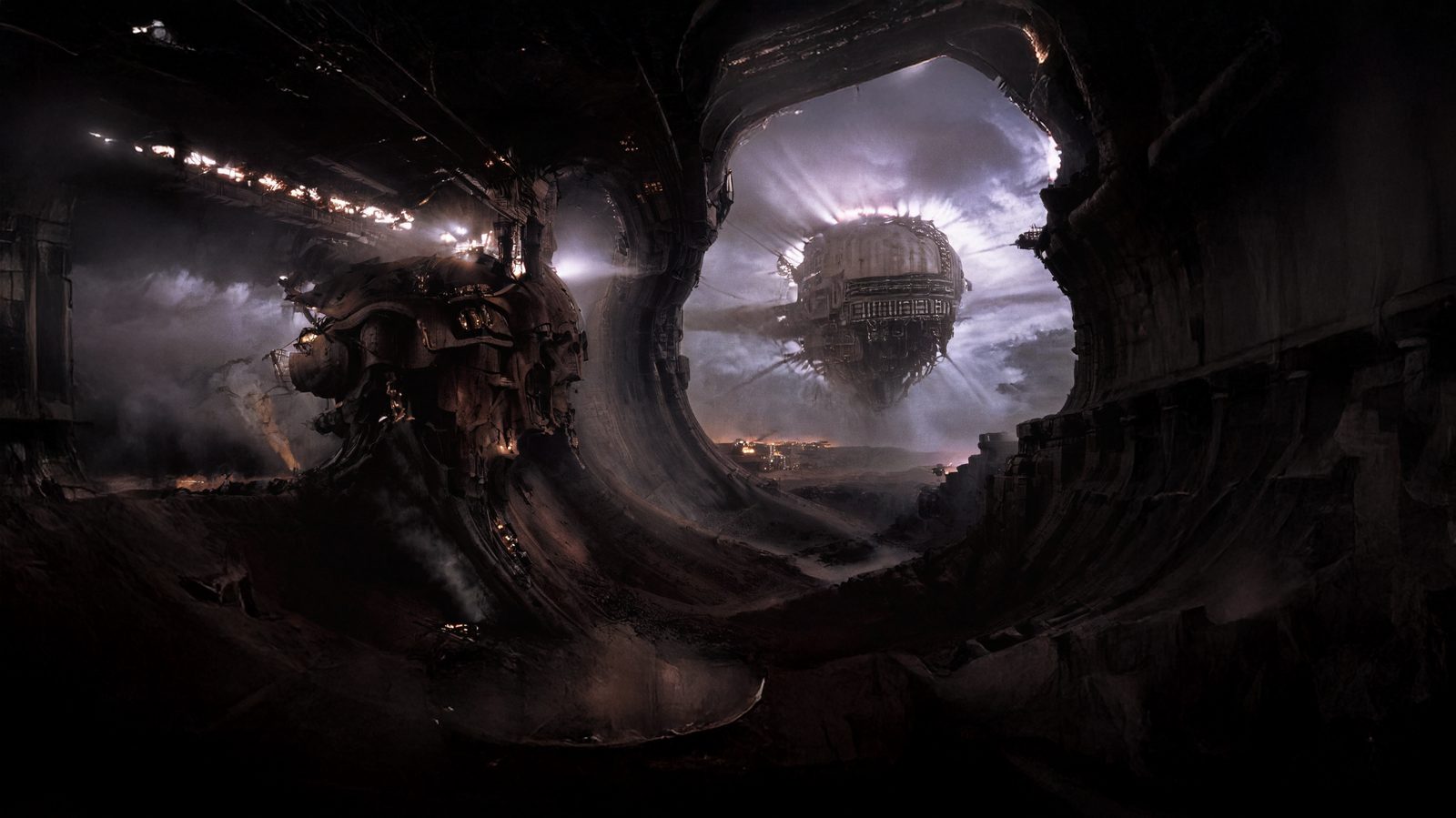
Prose in: "Coalition dry-dock, abyssal dunes, 75 mm Kodachrome."
A staged, topology-validated USD scene comes out — the skills below
converge into one result. orchestration method withheld pending filing
▸ STEP 2 · STAGE · MARQUEE
Scene Stager
$49 · $99 studio.
Drop a reference still. It is inverted into a scene specification
that fully captures camera and lighting, then baked into camera and
light fcurves on Blender, Maya, or Unreal. Same math, same output,
every host. method withheld pending filing
▸ STEP 3 · RETRIEVE
Kitbash Conductor
$29 · $49 pro.
Browse your kit by shape, not by filename. Every asset gets a
spectral signature on import — heat kernel + 32 lowest Laplacian
eigenvalues — and cosine similarity in that embedded space returns
the top-K matches in milliseconds. Eight shape classes, symmetry
tags preserved through swaps. Zero machine learning. The math is
enough.
▸ STEP 4 · REPAIR
Topo Doctor
$29.
AI mesh repair in one button. Four hazards: self-intersection,
pinch-off, curvature spike, Euler violation. Each triggers a
localized fix from a small audited DAG. No global remesh, no UV
rebuild — your bakes survive. This is Step 8 of the 11-step hybrid
pipeline: the interchange gate. USD, FBX, Alembic all clean.
▸ STEP 5 · QUADIFY
HolyGrail
$79 · $149 studio.
Boolean in, clean quads out. Every simply-connected polygon maps to
the unit disk via Schwarz–Christoffel, and pulling the disk's
orthogonal coordinates back through that map produces orthogonal
isolines on the mesh — which ARE quad edges, by definition.
Curvature-aligned, principal-direction-tracked, UDIM-safe. No
artist knobs. No tensor fields. Conformal geometry does the work.
▸ Why it accelerates your workflow:
every tool in this tier compiles to the
same deterministic math substrate
that runs identically in Blender, Maya, and Unreal. There is no
per-host rewriting, no manual sync, no drift. A scene staged in Maya
bakes to the same keyframes in Unreal by construction. The compiler is
pure: Eval(plan, manifest) → USD. ML informs the plan,
proofs gate the plan, and deterministic execution produces the result.
1360 of 1360 tests green across the line.
▸ What's coming:
a fifth modality (volumetric latent NeRF backdrops), a dedicated
film-stock authoring app, native Houdini host, and the full demo
workflow video showing the 5-act loop running on a mock studio
(computer → 3D print → LED dome → recorded composite → back into the
training corpus). The path broadens while the look refines.